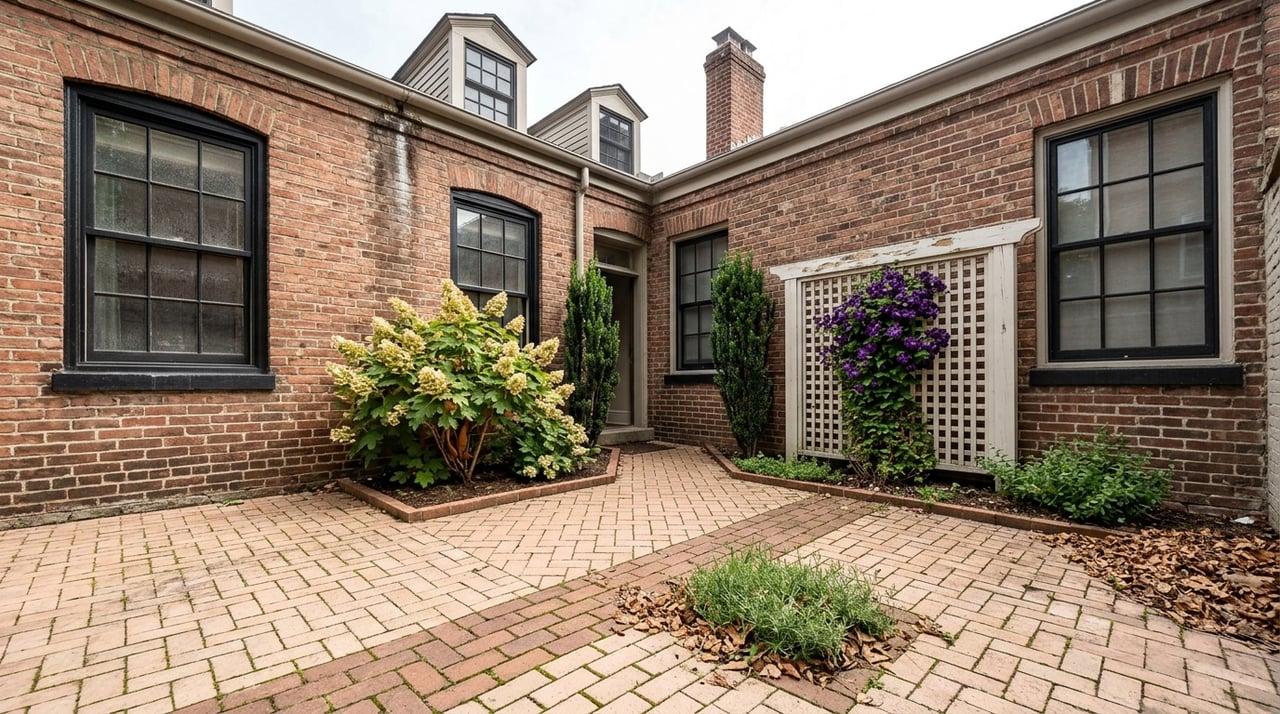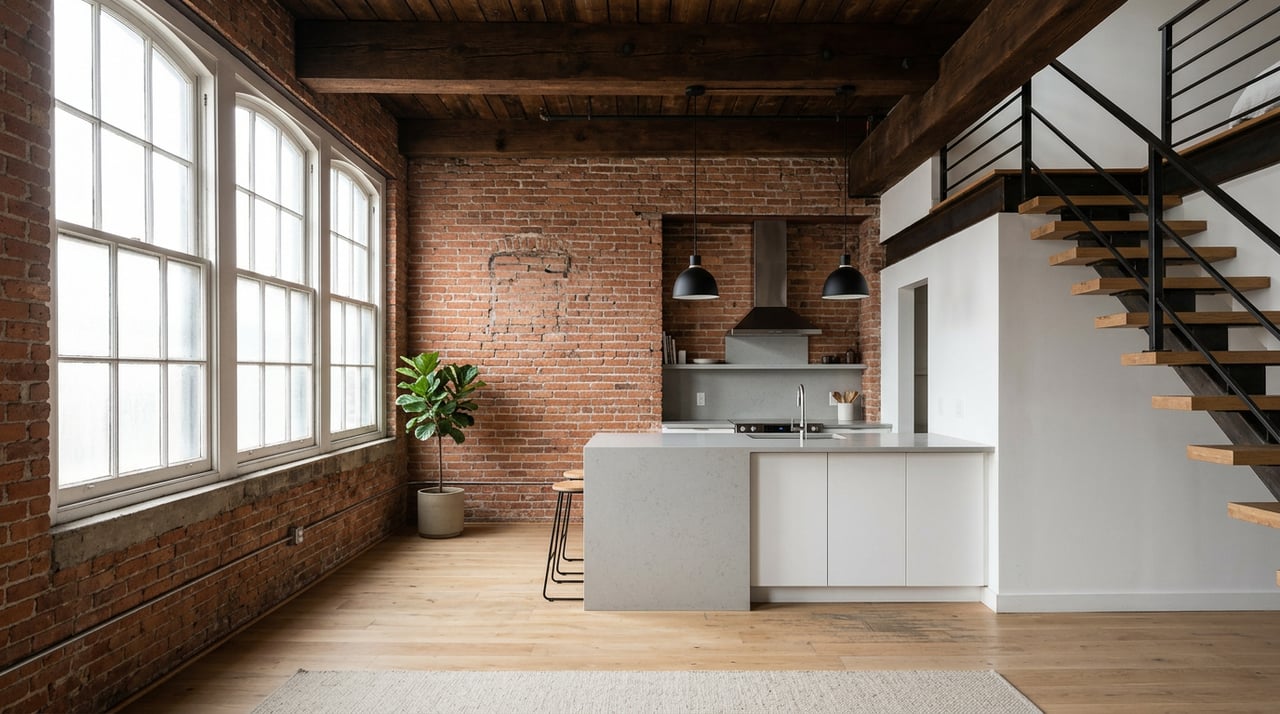
Two units recently came up for sale in the same building on Pond Street in downtown Amesbury. Both sit inside Carriage Lofts, the 49-unit condominium carved out of a brick textile mill built in 1900 and converted into housing in 2004. Same address. Same year of construction. Same industrial windows and timber ceilings the marketing photos love.
One listing described a kitchen renovated in 2023, a custom walk-in closet added in 2020, a new hot water heater from 2023, and a bathroom refreshed in 2025. The other listing, a floor below or a floor above, mentioned a brand-new heating system installed in 2026.
Same shell. Different guts. And that gap is the entire story of what you're actually buying when you shop Amesbury's millyard condo market.
The Building's Birthday Isn't the Warranty Clock
In a new-construction condo building, every unit ages on roughly the same schedule. The roof, the furnace, the windows, the water heater: they were all installed within months of each other, and they'll likely fail within a similar window too. A buyer can look at the year built and get a decent read on what's coming due.
A mill conversion breaks that assumption completely. The masonry might date to 1900. The individual unit's mechanical systems could be six months old or could be the same equipment the developer installed when the building reopened as condos twenty-some years ago. Nothing in the building's marketed history, the exposed brick, the arched industrial sash, the timber beams, tells you which one you're looking at. The building's story is about the shell. The unit's maintenance record is about everything that will actually cost you money.
This matters more in Amesbury than in a generic downtown loft market because the conversions themselves happened in waves, decades apart, which means the district has no single baseline age to work from at all.
The Millyard Didn't Convert All at Once
Amesbury's mills ran on the Powow River, which drops through downtown before joining the Merrimack at Point Shore. Textile manufacturing gave way to carriage building in the 1800s, and at one point more than thirty carriage makers operated in town. The Briggs Carriage Company complex at 14 and 20 Cedar Street survived that era and earned a spot on the National Register of Historic Places in 2007, decades after the carriage trade itself had faded.
The residential conversions that followed didn't happen on any coordinated timeline either. Carriage Lofts became condos in 2004, a $14 million redevelopment of a mill that had sat vacant for years before that. Down the street, a smaller former carriage-parts mill at 77 Elm Street didn't get its adaptive reuse until 2018, and it came back as office and retail space rather than housing. Amesbury's oldest surviving mill building, constructed in 1820, spent so long disguised behind a modern storefront that it turned nearly 200 years old before anyone outside a local historical volunteer noticed the industrial structure underneath, according to research published by the Amesbury Carriage Museum.
The point isn't trivia. It's that even the buildings in this district didn't age or get repurposed on a shared clock. If the buildings themselves show that much variation, assuming the units inside any one of them are uniform is the mistake.
| Building | Original construction | Residential conversion | What that gap means |
|---|---|---|---|
| Carriage Lofts | 1900 | 2004 | Units have had up to two decades to accumulate individual renovation history |
| 77 Elm Street (Mill 77) | 1884 | 2018 (commercial) | Newer renovation, but not a housing product |
| 142 Main Street | Church building, era not specified in conversion records | Recent conversion to 12 condo units | Newest product type in the district, different maintenance profile than a mill |
What the Condo Docs Actually Cover
A condo association's reserve study and master insurance policy exist to protect the shell and the shared systems: the roof, the brick repointing, the elevator, common hallways and laundry rooms. That's real information, and it's worth reading closely before you make an offer. Rocket Mortgage's plain-language breakdown of how HOA reserve funds and special assessments work is a useful primer if you haven't bought into an association before.
What that reserve study will not tell you is the age of the furnace inside the specific unit you're bidding on. Individual mechanical systems, in-unit water heaters, kitchen appliances, mini-split heat pumps: these belong to the unit owner, not the association, and no shared document tracks their condition building-wide. The two Pond Street units above prove the point. Both sit under the same reserve study. Both units have completely different answers to the question that actually determines your first five years of ownership costs: what's about to break.
Ask the listing agent, in writing, for the specific unit's own repair and renovation history before you write an offer. Don't let the building's founding year stand in for it.
Parking Is Deeded, Not Assumed
A mill built for manufacturing in 1900 wasn't designed around 49 households and 49 cars. Amesbury's millyard sits on tight parcels along the Powow River, which means the association can't just pave more lot when demand for parking rises the way a suburban development might. Instead, spots get deeded directly to individual units, a real property right attached to the deed rather than a shared amenity pooled across the building.
Several current listings in Carriage Lofts specifically call out deeded parking as a feature. That's not filler copy. It's doing real work, because the absence of that phrase in a listing you're considering means something too: street parking, a waitlist, or a rented spot elsewhere. In a single-family sale, buyers know to ask about a garage. In a condo transaction inside a converted mill, that same question gets skipped more often than it should, because buyers assume a parking spot comes bundled with ownership the way it typically does in newer construction. Here, it often doesn't.
Before You Write an Offer
A few questions worth asking directly, not inferring from the marketing:
- What is this specific unit's renovation and repair history, not just the building's conversion year?
- Does this unit include a deeded parking spot, and if not, what does daily parking actually look like?
- When was the association's last special assessment, and did it cover shell repairs or something else?
- How does the building's original construction date compare to its conversion date, since the gap between those two numbers tells you more about aging infrastructure than either number alone?
None of these questions show up automatically in a standard condo document package. They come from asking the seller and the listing agent directly, and from reading a few years of association meeting minutes if the seller's disclosure package includes them.
What This Means If You're Actually Shopping This District
A downtown mill loft and a suburban ranch off Route 110 don't get priced on the same scale, and within the millyard itself, a unit with a deeded spot and recently updated mechanicals doesn't sell for the same number as a comparable square footage without either. Pricing inside a single converted mill can spread more widely than buyers expect precisely because the things that drive cost, unit-level renovation history and deeded parking, don't show up in the square footage or the year built at all. Two units with identical floor plans in the same building can carry genuinely different price tags for reasons that have nothing to do with finishes and everything to do with what's behind the walls.
The character that draws buyers to Amesbury's converted mills, the exposed brick, the river views, the walk to downtown restaurants and breweries, is real and it's earned. But that character sits on top of a building that aged unevenly and was renovated unit by unit over two decades. Buying into it well means treating each unit as its own diligence project rather than trusting the building's founding year to tell the whole story.
If you're weighing a mill loft against other property types in Amesbury or across the North Shore, The Cronin Team can walk through the specific building's association documents, unit history, and parking situation with you before you write an offer. Reach out for a conversation about what a particular listing actually includes, not just what its listing photos suggest.